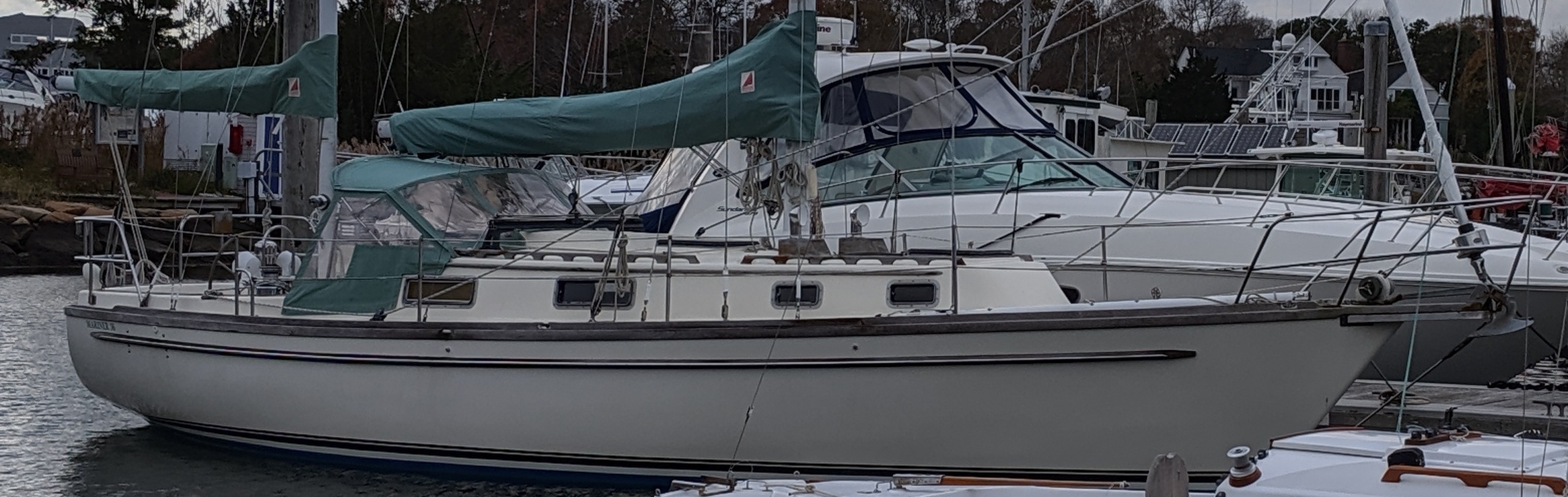
Electric Auxilliary Installation
There were a few prerequisites to installation of the electric auxilliary. These include some completed steps such as removal of the old diesel (see the Diesel Removal web page). Some are ongoing such as battery installation (see the Battery Installation Plan web page) and installation of the battery switches and the high amperage panel (see the High Amperage Panel and Breakers web page).
Mechanical Installation
Although the diesel was removed the same prop will be used. The old shaft was bent and a new one had to me machined. The cutlass bearing also needed replacement. The new cutlass bearing and new shaft were installed in 2020. The prop was sent out to PYI Inc and refurbished. The prop was installed in 2021.
An important step was the selection of a new electric auxilliary (see the Electric Auxilliary Motor Selection web page). A QuietTorque 10.0 Sport Electric Motor, from Electric Yacht was picked and ordered.
The Electric Yacht auxilliary motors are intended to be drop in replacements for a diesel. They have a set of four mounts that are intended to be placed on the same stringers that the diesel was mounted on. The motor assembly bolts to these mounts with some allowance for adjustment of the motor assembly on the mounts. The placement of the mounts and placement of the motor assembly on the mounts must put the shaft of the motor on the same vertical plane as the prop shaft and close enough to get the motor assembly output coupler aligned with the prop shaft coupler. The motor assembly can be moved up and down, fore and aft, and tilted by loosenning some bolts on the motor assembly and then adjusting the alignment and retightenning.
The electric motor arrived in 2020 but was not yet been installed.
Electrical Installation
For a 10kW motor all of the wiring must be sized for at least 250A. A 250A fuse is provided. The electrical system design is described in the Battery, Charging and Load Wiring web page. In this installation the 48V battery bank will be connected to a battery switch, then a 300A breaker, then split to another breaker for system loads and to a switch for the motor. The 250A fuse will be connected to the motor switch and then to the motor. All of this wiring will use AWG 2/0 wire (see the Wire Sizing Plan web page).
All electric components have arrived but this wiring has yet to be completed.