High Amperage Panel and Breakers
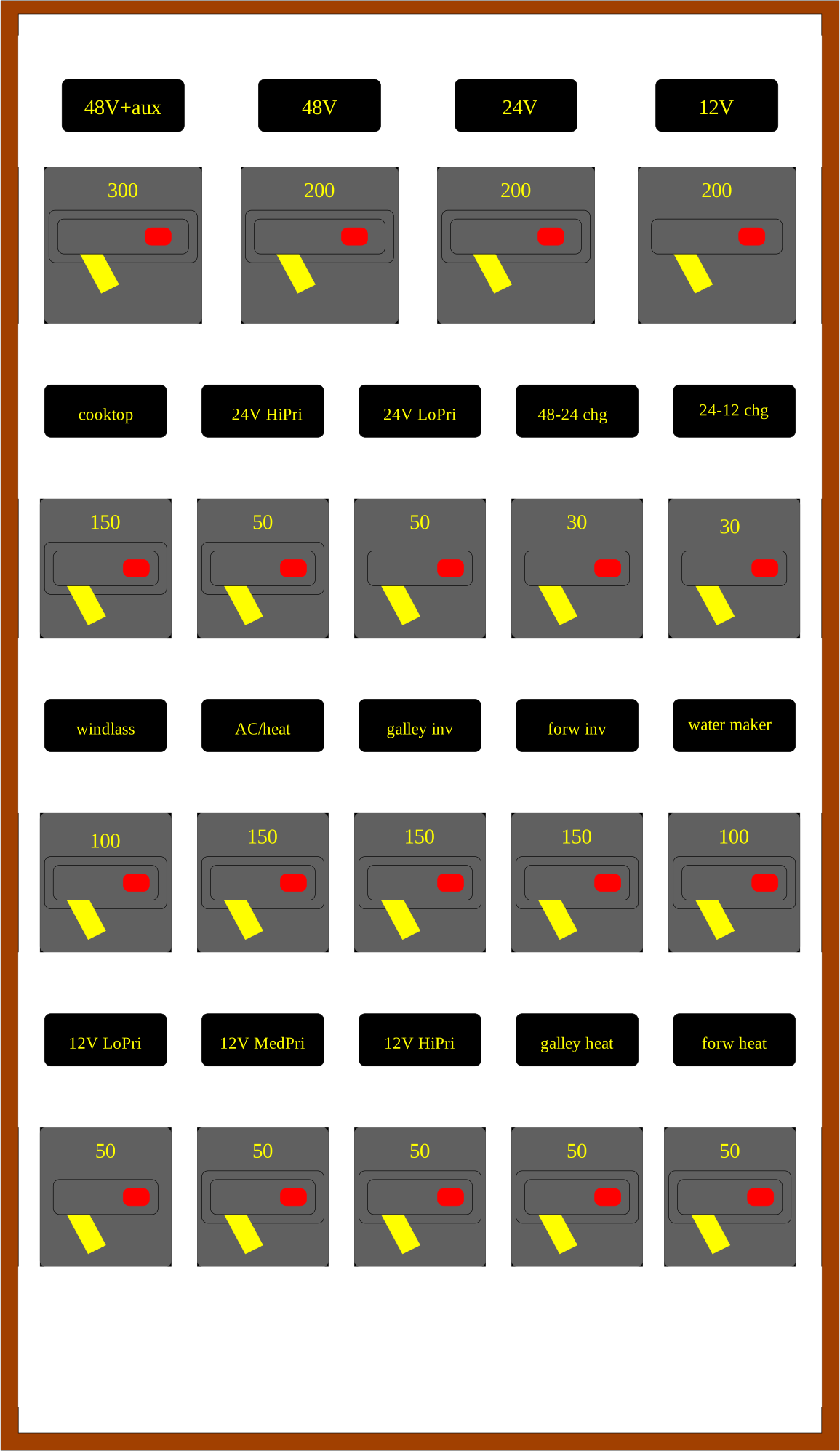
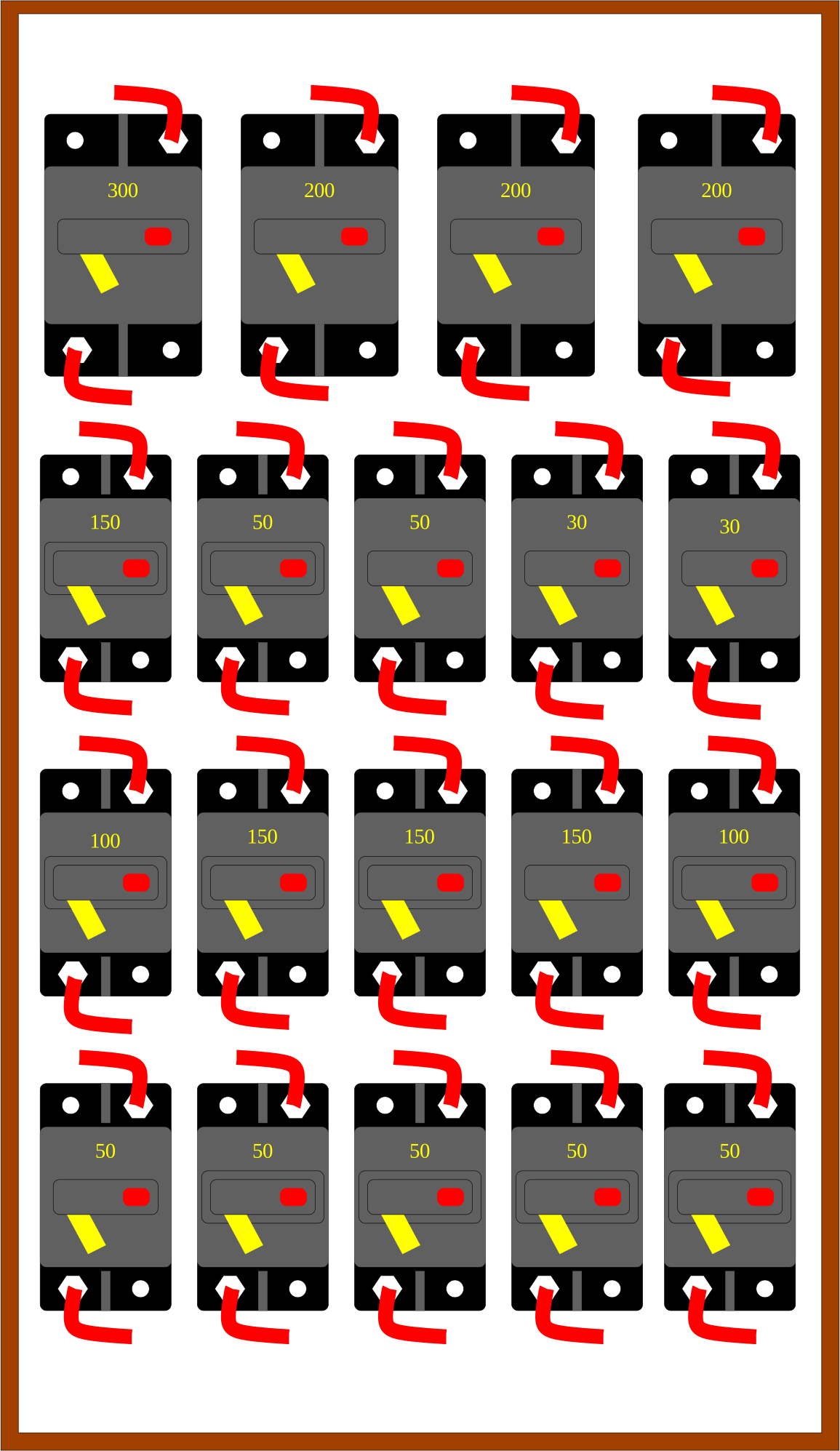
High amperage DC thermal breakers were used rather than using fuses. These need to be accessible and so they are placed on the left of the companionway (on the starboard side) opposite the low amperage breaker panel.
High Amperage Breaker Panel Wiring
The type of breakers used have contacts on the front. A hinged cover leaves the breakers in place but exposes the wiring for maintenance. It is essential to keep the breakers stationary due to the size of the wires going to this panel. Large wires such as AWG #2/0, AWG #2 and even AWG #6 don't bend easily.
Some of the high amperage breakers also appear in the low amperage breaker panel with the low amperage breakers only operating solenoids. These include the 24V inverters and the 12V water heaters which are more often switched on and off and where the wire sizes needed would be excessively large for the low amperage breaker panel.
Some of the breakers are followed by solenoids that are automatically switched off if the battery SoC is low. These include the 24V high SoC (lower priority) loads and the 12V medium SoC (medium priority) and 12V high SoC (lower priority) loads. Charging of the 24V bank from the 48V bank and charging of the 12V bank from the 24V bank is also switched on or off depending on the relative SoC of the batteries.
High Amperage Enclosure Dimensions
Quite a bit of space is provided above and below each high amperage breaker to accomodate the hard to bend small gauge wires which will be mostly AWG #6 and AWG #2. AWG #2/0 may be used only to the 48V battery switch prior to the 300A breaker and from that breaker to the auxilliary motor switch. Additional space is provided at the bottom since this is where the wires will need to exit. To give a symetric look and to accomodate top hinges for a cover extra space is provided at the top. A set of panels hides the wiring and provides a place to put labels.
Each Series 285 breaker is 1⅞" wide and 3¼" tall. Each Hiitio breaker is 1⅞" wide and 3½" tall.
There is 1¼" vertical distance between the three rows of Series 285 breakers and between the row of Hiitio breakers and the top row of Series 285 breakers. There is 1½"between the bottom row of breakers and the frame. There is 3½"between the top row of breakers and the frame. The frame is ½" wide. This yields a height of 23".
The horizontal distance between Series 285 breakers is ½". The horizontal distance between Hiitio breakers is 1¼" except between the middle two where it is 1⅜". The row of five Series 285 breakers is 11⅜" wide and the row of four Hiitio breakers is also 11⅜" wide due to the extra ⅛" in the center. There is a ½" space between the rightmost breaker and the frame. There is a 2⅜" space between the leftmost breaker and the frame. This yields a width of 15½".
The outer dimensions of the enclosure is therefore 23" high by 15½" wide.
Panel Covers and Hinges
Both circuit breaker enclosures will have a hinge at the bottom to provide access to the panel for maintenance. Wiring is on the front side of the high amperage breakers. There is no need to access the back so the hinge will simply allow a cover to swing down exposing the panel wiring. This enclosure will have a door with a tempered glass or polystyrene window (plexiglass or lexan) that is hinged at the top. A hook and eye on the headliner will hold the door open for routine access.
Panel Bus Bars
The large space on the left side allows bus bars to be placed inside this enclosure. The wire from the battery switch to the 300A breaker must be AWG #2/0. Two wires will need to be stacked on the other side, one to a 200A breaker for 48V loads, one to a 150A breaker to the cooktop and oven inverter. Only a limited number of wires can be stacked, generally two. For lower amperage wires (50A or less) three can be stacked on the end post of the bus bar but this should be avoided. Two four post 250A bus bar will be needed for the 24V loads and one four post 250A bus bar will be needed for the 12V loads. The 24V bus bars will have 8 lugs facing right, a wire between bus bars and one wire each on the very top and very bottom. This can accomodate 10 wires, where 9 are needed plus a bilge pump wire with an inline fuse. The 12V bus bar will have 6 wires plus a bilge pump wire with inline fuse.
Battery Switch Enclosure
Adjacent to the breaker panel enclosure is a short and wide enclosure holding four battery switches. These provide emergency shut off or storage shutoff for the motor, the other 48V loads, the 24V loads, and the 12V loads. This enclosure extends to where the wires can be passed in the deep cavity formed by the cockpit coaming.
Bend Radius Considerations
The Wire Sizing Plan web page lists the recommended minimum bend radius for various sizes of Ancor wire. The top row of breaker will be the most problematic using some AWG #2/0 but mostly AWG #2 wire.
Most problematic is AWG #2/0 with a bend radius of 5" The AWG #2/0 wire from the battery switch will enter on the left side of the panel and will have to pass up near the right side and approach the top of the breaker from the right. A AWG #2/0 will exit this breaker and head down and slightly right, then bend to the left to exit the panel on the left headed toward the motor battery switch. A second wire on this breaker is AWG #2 with a bend radius of 3½" which will loop back to the top row and connect to the top of the second breaker.
The remaining top row of breakers will have an AWG #2 wire on the top and another AWG #2 on the bottom. The top conductor is the more problematic. The second from the left breaker can loop the wire along the right side. The two breakers on the right will have to loop the AWG #2 wire up and to the left. This is the reason that it is necessary to leave a 3½" space above the top row of breakers. These two wires on the top of the breakers are the feeds from the 24V and 12V battery switches.
The AWG #2 on the bottom of the right two breakers lead to the two bus bars for 24V and 12V. The bottom of the second breaker to the left will have two wires, An AWG #2 wire leads diagonally to a breaker below and to the left of it. The other wire is AWG #6 and leads down and loops counterclockwise about 225° then loops clockwise about 225° to reach a second row breaker.
The bus bars will be on the far left of the enclosure. Lugs and wires will exit to the left or at the top and the bottom of each bus bar. The 24V and 12V feed from the top row of breakers and the wire between the two 24V bus bars will the AWG #2. The bilge pump wires will be AWG #10 with the inline fuses protecting these smaller wires. All other wires on the 12V bus bar will be AWG #6. Three of the 24V breakers are 150A and will be fed with AWG #2 wire from the bus bars. The remaining 24V bus bar wires will be AWG #6.
All of the wires exiting the breaker panel will exit to the right. The cockpit is behind the panel and so wires cannot head aft until they have reached the space under the coaming. Wires headed to solenoids or to the lower amperage breaker panel will exit to the right and then head aft toward the solenoids or aft before heading to the port side and the lower amperage breaker. The windlass wire has no solenoid. This wire will either pass aft of the battery switches and up the starboard side toward the bow or head aft and over to the port side and then to the bow.