Solar Panel Wiring Configurations
Solar Charging Configurations
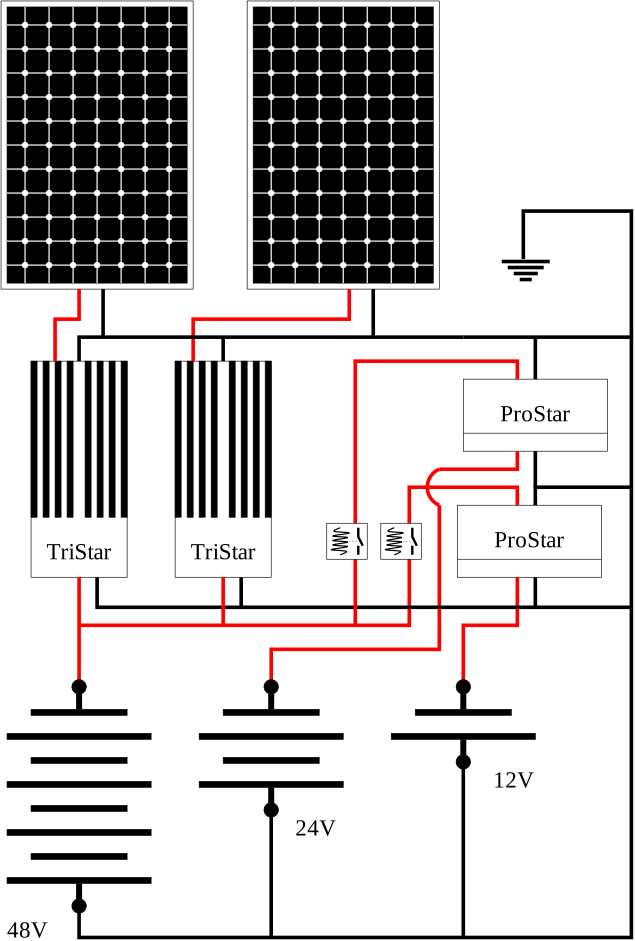
The 48V battery bank will charge directly from one or two TriStar solar controllers that are powered by the two solar panels. TriStar has to be used since the panels are 58V nominal and the battery is 48V, both exceeding ProStar ratings. Two controllers may be used, one for each panel, so that if shading of one panel occurs then each panel can be held at its maximum power point (MPP).
The 24V and 12V batteries could also be connected to separate TriStar solar controllers. Alternately, and it seems better is to have the 24V and 12V batteries connected to ProStar solar controllers which draw power from the 48V battery rather than directly from the panels.
Direct Connect to Solar Panels (not used)
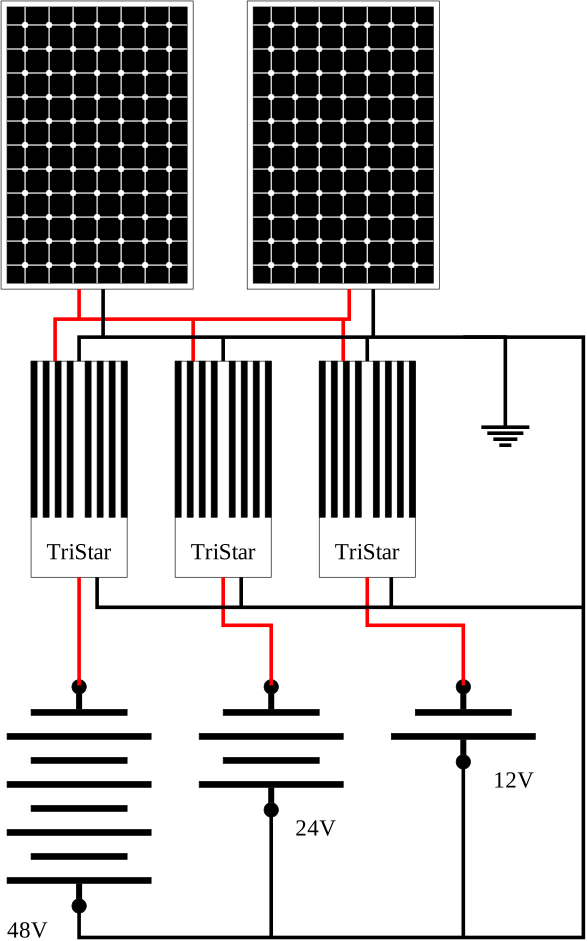
Coonecting each of the three battery banks to solar controllers that are driven directly by the solar panels would require that TriStar solar controllers be used. ProStar could not be used in this configuration due to the nominal 58V panels with Voc well above 60V. The minimum would be three TriStar solar controllers, but six is likely to be needed.
Shading on a sailboat can be a severe problem. If one solar panel is mounted on each side of the centerline, much of the time one or the other solar panel will be shaded by either one of the masts or the main boom, or a mast and the boom. If the sun is on the port side of the boat, the port solar panel would be in the clear, other than stays which cast very little shadow (having an affect, but minimal).
When shading is an issue MPPT controllers make even more sense. To be effective one MPPT controller is needed per string (set of panels connected in series). It would be foolish to put the two panels in series since one panel would be shaded much of the time and degrade the performance of the string (of two). If the two panels are in parallel, this is two strings of one panel each. With three battery banks, a total of six MPPT controllers would be needed. These are costly and therefore this design is not cost effective.
The 12V battery and 24V battery are together only 3 kWh. Each solar 330W panel on a sunny day and if not shaded should be able to deliver 1.3-1.6 kWh of power per day. With some contribution from the partially shaded panel, 1.5-2 kWh per day. Other than by installing and abusing a AC/heat system, this amount of power is unlikely to be used by these two house banks. Some of the power delivered by the panels would go toward recharging the 48V bank though if discharged that could take days.
Charging can be prioritized using RD-1 relay controllers and solenoids. For example, the 12V battery can be prioritized over the others due to its role in running systems needed for navigation. If charge on the 12V battery falls below some levels, then the other two batteries would not be charged. The 24V battery could be given a secondary priority. If the 24V battery level falls below some threshhold, then the 48V bank would not be charged. RD-1 relay controllers and solenoids can also be used to disable non-essential loads such as AC/heat, any entertainment systems, some galley appliances, inverters, and if necessary all but minimal cabin lighting.
Connect to 48V side of Solar Controllers (configuration used)
There are many advantages to using the 48V battery bank to power the charge controllers for the 24V battery and the 12V battery. Charging the 48V battery bank can use one TriStar controller for each solar panel. The charge controllers for the 24V battery and the 12V battery can be ProStar controllers and can be the less expensive ProStar PWM controllers.
If there are consecutive days with very little sun, then the 24V battery and the 12V battery can draw power from the much larger 48V battery bank. For example, if the largest load in port is refrigeration instead of having 1.8 kWh of 24V battery available, some portion of the 10.8 kWh 48V bank would also be available. If underway and the refrigeration, autopilot and radar were the largest power draws, then some portion of the 10.8 kWh 48V bank would also be available.
Prioritization of battery charging and disabling loads can be accomplished using RD-1 relay controllers and solenoids. For example, the 24V and 12V charging can be disabled if the 48V bank is drawn down below some threshhold of auxilliary power needed to travel a short distance and for manuevering into a slip or picking up a mooring. If either the 24V battery or 12V battery falls below some threshhold, then charging of that one battery could resume until a lower 48V battery threshhold is reached. RD-1 relay controllers and solenoids can also be used to disable non-essential loads.